There’s something uniquely comforting about a bowl of warm, freshly popped popcorn. It’s the quintessential snack for movie nights, casual gatherings, or simply a cozy evening at home. While store-bought microwave bags offer convenience, nothing quite compares to the taste, aroma, and fun of making popcorn from scratch. If you’re on the hunt for The Best Popcorn Maker to elevate your snack game, you’ve come to the right place. We’ll dive deep into the world of popcorn machines, exploring different types, what makes them tick, and how to choose the perfect one to suit your popping preferences.
The World of Popcorn Makers: Types and How They Work
Popcorn makers come in various styles, each with its own charm and method of transforming humble kernels into fluffy delights. Understanding these differences is the first step in finding your ideal companion for cinematic snacks.
Hot Air Poppers: The Healthy Choice
Hot air poppers are champions of the health-conscious kitchen. They use a powerful fan to circulate high-temperature air around the kernels, popping them without a single drop of oil. This means your popcorn is naturally low in calories and fat, offering a guilt-free treat.
How they work: Kernels are placed in a popping chamber, and hot air is blown through them. Once popped, the light kernels are ejected through a chute directly into your waiting bowl.
Pros:
- Healthier: No oil required for popping.
- Fast: Many models can pop a batch in under 3 minutes.
- Easy Cleanup: Often just requires a quick wipe down since there’s no oil residue.
- Simple Operation: Usually just an on/off switch (though some lack one, starting immediately when plugged in).
Cons:
- Drier Texture: Popcorn can sometimes be less flavorful without oil during the popping process.
- Butter Melting: Built-in butter melting trays can be ineffective or lead to soggy popcorn if butter drips back into the chamber.
- Scattering Kernels: Some models may toss a few unpopped kernels out.
Stovetop Popcorn Makers: For the Traditionalist
For many, the stovetop popcorn maker, like the iconic Whirley Pop, represents the gold standard of homemade popcorn. These machines evoke a nostalgic, old-school feel, allowing you to craft popcorn with a rich, authentic taste.
How they work: Kernels and oil (and sometimes butter) are added to a large kettle, usually with a hand-cranked stirring mechanism. The heat from your stovetop pops the corn, while the stirring arm ensures even popping and prevents burning.
Pros:
- Superior Flavor: Allows for oil and butter for that classic movie theater taste.
- Even Popping: Stirring mechanism minimizes unpopped kernels.
- Durable: Often made with sturdy materials like stainless steel.
- Large Batches: Capable of producing generous amounts of popcorn.
Cons:
- Manual Effort: Requires active stirring.
- More Cleanup: Oil can lead to more residue to clean.
- Supervision Needed: You need to monitor the popping process to prevent burning.
- Not Ideal for Electric Stoves: Can sometimes struggle with uneven heating on electric burners.
Electric Oil Poppers: Convenience with Rich Flavor
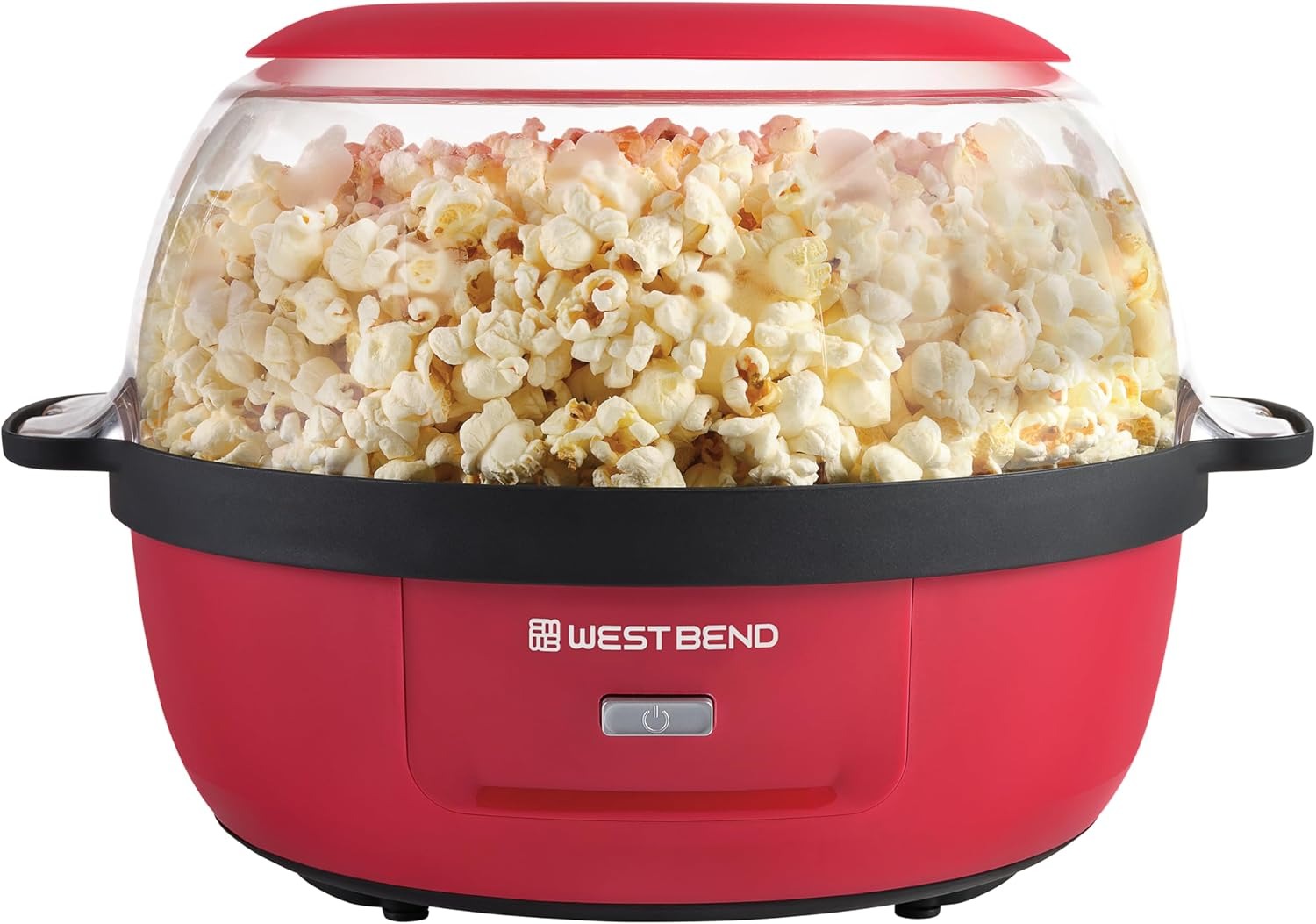
Electric oil popcorn makers offer a blend of convenience and classic taste. These countertop appliances are designed to make oil-popped popcorn with less fuss than their stovetop counterparts, often featuring self-stirring arms.
How they work: Similar to stovetop models, kernels and oil are heated in a non-stick base. An electric stirring arm continuously moves the kernels for even popping, and a clear lid often doubles as a serving bowl.
Pros:
- Hands-Off Operation: Less manual effort than stovetop models.
- Great Flavor: Uses oil for a richer, more traditional popcorn.
- Even Popping: Self-stirring ensures consistent results.
- Integrated Bowl: Lids often serve as convenient serving bowls.
Cons:
- Requires Oil: Not the healthiest option if you’re avoiding fat.
- Larger Footprint: Can take up more counter space.
- Cleanup: Grease buildup requires more thorough cleaning.
Microwave Popcorn Makers: Quick and Compact
If speed and simplicity are your top priorities, microwave popcorn makers are a fantastic choice. These clever gadgets allow you to make popcorn in your microwave without relying on pre-packaged bags filled with unknown ingredients.
How they work: Kernels are placed in a specially designed silicone or glass bowl, which then goes into the microwave. The container heats the kernels, and the lid often prevents overflow while allowing steam to escape.
Pros:
- Ultra-Convenient: Pops popcorn in minutes.
- Compact & Portable: Many silicone models collapse for easy storage.
- Easy to Clean: Often dishwasher-safe.
- Oil-Optional: Can be used with or without oil.
Cons:
- Limited Capacity: Best for single servings or small batches.
- Potential for Burnt Kernels: Easy to overcook if you don’t listen carefully.
- Hot to Handle: Silicone bowls can get very hot.
Choosing Your Ideal Popcorn Maker: Key Factors to Consider
With so many options, how do you pick the best popcorn maker for your home? Let’s break down the essential factors to guide your decision.
What’s Your Popcorn Preference?
The first question to ask yourself is about taste and health. Do you crave that indulgent, buttery movie-theater experience, or do you prefer a lighter, oil-free snack? Hot air poppers are perfect for those prioritizing health, while stovetop and electric oil poppers deliver that rich, savory flavor. Microwave poppers offer flexibility, allowing you to go oil-free or add a touch of fat for taste.
How Much Popcorn Do You Need?
Popcorn makers vary greatly in capacity. For a solo snack or a small family, a microwave popper or a compact air popper might suffice, typically yielding 4-8 cups. If you frequently host movie nights or have a large family of popcorn enthusiasts, consider an electric oil popper or a stovetop model that can produce 15-24 cups per batch. Some larger commercial-style machines can even churn out gallons for big parties!
Speed and Efficiency
Most home popcorn makers are impressively fast, producing a batch in 2 to 4 minutes. Air poppers are often the quickest, while stovetop models require a bit more hands-on time, although they too can be quite rapid. If you need quick, continuous batches for a crowd, check if the machine requires a cooling-down period between uses.
Ease of Cleaning and Maintenance
Nobody wants a hassle after enjoying a delicious snack. Hot air poppers are generally the easiest to clean, often just needing a quick wipe. Microwave silicone bowls are frequently dishwasher-safe. Stovetop and electric oil poppers, while delivering great flavor, will require more thorough cleaning due to oil residue. Look for models with non-stick surfaces and removable, dishwasher-safe parts to simplify the process.
Durability and Build Quality
Investing in a well-built popcorn maker ensures it will be a staple in your kitchen for years. Stainless steel components, especially in stovetop models, are known for their longevity. While plastic can be durable, ensure it’s heat-resistant and sturdy. Read reviews for insights into how models hold up over time.
Footprint and Storage
Consider your kitchen space. Compact air poppers and collapsible microwave poppers are excellent for smaller kitchens or those who prefer to tuck appliances away. Larger electric poppers or stovetop models will require more counter or cabinet space. If you’re dreaming of a true cinema experience, cart-style machines are available, but they demand significant room.
Making the Perfect Batch: Tips and Tricks
Even with the best popcorn maker, a few simple tips can elevate your popcorn from good to truly gourmet.
Selecting the Right Kernels
The quality of your kernels makes a huge difference. Fresh, high-quality kernels pop more consistently and leave fewer “old maids.” Store them in an airtight container in a cool, dark place. For different textures, try “butterfly” kernels for fluffy, classic popcorn, or “mushroom” kernels for a rounder, denser pop that holds up well to coatings.
The Magic Ratio (for oil poppers)
When using oil, a general rule of thumb is about 1-2 tablespoons of oil for every ½ cup of kernels. Overfilling can lead to uneven popping and burning, while too little oil can result in more unpopped kernels. Experiment to find your perfect balance.
Seasoning Your Popcorn to Perfection
The world is your oyster when it comes to popcorn seasoning!
- Classic Butter & Salt: Melt butter separately for air-popped corn or add it during the popping process for oil-based machines. Fine-grained popcorn salt adheres better than coarse table salt.
- Sweet Treats: Try cinnamon sugar, caramel drizzle, or even a dash of cocoa powder.
- Savory Surprises: Nutritional yeast for a cheesy flavor, chili powder, garlic powder, dried herbs, or a sprinkle of Parmesan cheese can transform your snack.
Safety First!
Always follow your popcorn maker’s instructions carefully.
- Never leave a stovetop or electric popper unattended.
- Be cautious when handling hot parts.
- Allow hot air poppers to cool between batches if recommended by the manufacturer.
- Don’t overfill the kernel chamber, as this can lead to poor popping and potential hazards.
Beyond Butter and Salt: Creative Popcorn Recipes
Once you’ve mastered the basic pop, unleash your culinary creativity!
- Spicy Chili-Lime Popcorn: Toss freshly popped corn with a mix of chili powder, cumin, lime zest, and a pinch of cayenne.
- Sweet & Salty Kettle Corn: Add sugar directly to your stovetop or electric oil popper during the popping process for a delightful crunch.
- Garlic Herb Parmesan Popcorn: Drizzle with melted garlic butter, then sprinkle generously with grated Parmesan cheese and dried Italian herbs.
- Maple Bacon Popcorn: Fry up some crispy bacon, crumble it, and toss with maple syrup and the popcorn.
The Joy of Homemade Popcorn: Benefits Beyond the Bowl
Owning a popcorn maker isn’t just about making a snack; it’s about enhancing your lifestyle.
- Cost-Effective: Making your own popcorn is significantly cheaper than buying pre-packaged bags or cinema popcorn.
- Control Ingredients: You dictate what goes into your snack, avoiding artificial flavors, preservatives, and excessive sodium often found in commercial options.
- Entertainment Value: A popcorn maker, especially a stovetop or classic electric model, adds a fun, interactive element to movie nights and parties.
- Freshness: There’s no comparison to the taste and texture of popcorn popped just moments before you eat it.
- Versatility: From healthy snacks to gourmet treats, the possibilities for flavor combinations are endless.
Expert Insight: A Word from Chef Anya Sharma
“Finding the best popcorn maker is all about aligning it with your lifestyle,” advises Chef Anya Sharma, a culinary expert and home appliance enthusiast. “For a quick, light snack, an air popper is unbeatable. But if you truly want that rich, classic cinema experience, don’t shy away from a quality stovetop or electric oil popper. The little extra effort is always worth the incredible flavor and texture.”
Frequently Asked Questions (FAQ)
How much popcorn can a home maker produce?
Most home popcorn makers can produce between 8 to 24 cups of popped popcorn per batch, depending on the model and type. For instance, a 4-ounce kettle typically yields about 10 cups, while larger air poppers can make up to 18 cups.
Do I need oil for all popcorn makers?
No, hot air poppers do not require oil for popping, making them a healthier, oil-free option. Stovetop and electric oil poppers, however, rely on oil for heat transfer and flavor. Microwave popcorn makers can be used with or without oil, depending on your preference.
How often should I clean my popcorn maker?
For oil-based popcorn makers, it’s best to clean them after every use to prevent grease buildup. Hot air poppers generally require less frequent cleaning, perhaps weekly, with a simple wipe-down after each use. Always consult your specific model’s manual for detailed cleaning instructions.
Can old kernels affect popping?
Yes, old or dried-out kernels can significantly impact popping efficiency, leading to a higher number of unpopped kernels. Store your popcorn kernels in an airtight container in a cool, dark place to maintain their freshness and moisture content.
What’s the healthiest popcorn maker?
Hot air poppers are generally considered the healthiest option because they pop kernels using only hot air, eliminating the need for oil and significantly reducing calorie and fat content.
What’s the difference between butterfly and mushroom kernels?
Butterfly kernels, the most common type, produce popcorn with irregular “wings,” making them light and fluffy, perfect for catching butter and seasonings. Mushroom kernels, on the other hand, pop into a denser, more spherical shape, which is ideal for candies, caramel corn, or other coatings as they are less prone to crumbling.
Your Journey to Popcorn Perfection
Choosing the best popcorn maker is an investment in countless moments of joy, whether you’re settling in for a blockbuster or simply enjoying a delicious, wholesome snack. By considering your personal preferences for taste, health, convenience, and capacity, you can confidently select a machine that transforms your kitchen into a personal popcorn paradise. So go ahead, find your perfect popper, grab some kernels, and get ready to enjoy the ultimate homemade popcorn experience!